Portfolio
A selection of projects that show how I think, what I build, and why I make the design choices I do.
Featured Work
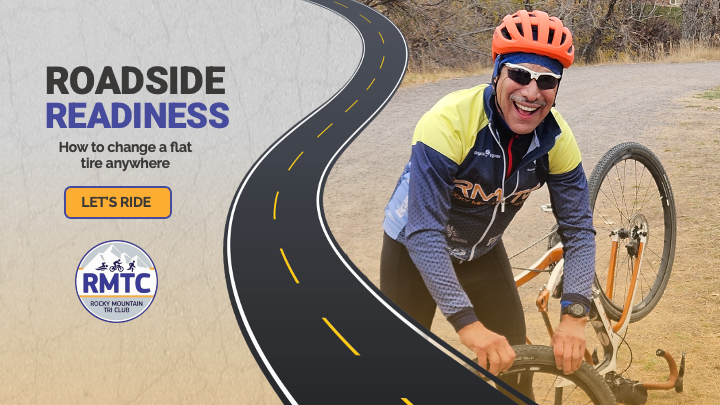
A 3-minute look at the course and how I built it.
-
[brakes screeching, air releases from tire] Hi, I'm Jessica and I run JHaus training, an instructional design studio based in the Denver metro area. I'm going to show you a real problem I ran into with my own tri club and what I built to solve it. This is Roadside Readiness, a full eLearning course teaching cyclists how to change a flat tire built for the Rocky Mountain Triathlon Club, where I've been a member for about 17 years.
A good portion of our members have never had to change a flat by themselves, and new members are joining all the time. Before I opened storyline, I wrote out my plan, who this was for, what they needed to walk away knowing, and how I'd know it worked. This course is really the foundation of a bigger plan. It teaches the knowledge, but changing a flat is a physical skill, so learners will still need real hands on practice to actually be ready.
But there's one thing that eLearning accomplishes entirely on its own. Every tool introduced in the course goes into a tool bag that the learners can open at any point, and packing a complete flat repair kit becomes part of the graded challenge at the end. So even before anyone touches a tire lever in real life, they can walk away from this course with the right flat repair kit. Even if they still need a hand from a fellow rider on the side of the road, they're at least not draining someone else's supplies. Here's the style guide I built, basically a rule book for colors, fonts, and visual style so everything looks consistent and feels aligned with the RMTC brand. From there, I built a visual prototype, a rough mock up of what the screens would actually look like so I could test the flow and structure before ever opening Storyline.
I also wanted the course itself to respect how adults actually learn, not lecture everyone through the same exact steps, regardless of their experience. So I built two paths: a guided path for someone brand new to this process, and an open path for someone who just wants a refresher on specific steps. Bringing it all to life meant generating the characters, Jordan and Alex, and then weaving in real footage alongside that animation, which was new territory for me and a steep learning curve, but well worth it.
My husband and I filmed all of the real world footage together, and then I edited it in Premiere. So learners get to see the actual physical technique done correctly, not just an animated approximation of it. And here's one specific interaction that I'm proud of. A gear slider that learners use when removing the wheel. It's not a native Storyline feature.
What I did was built nine versions of the gear graphic in Illustrator, and then imported them as picture states into storyline tied to a slider. When learners get it correct, they see real footage of the wheel coming off the bike. When they get it wrong, they get on screen guidance before trying again. This project taught me a lot. I leaned into the Adobe Creative Suite more heavily than ever before.
All while working together with storyline and figuring out how to blend real world video with animation gave me a whole new set of skills. You can see the full course and more of my work at jhaustraining.com. Thanks for watching.
A Storyline 360 course that teaches cyclists how to change a flat tire anywhere on the road, created for members of the Rocky Mountain Triathlon Club. I designed, built, animated, and narrated it, and filmed the repair footage with my husband. It features custom interactions, including a JavaScript cursor built with AI assistance, and animation in Adobe Character Animator.
Roadside Readiness
Case Studies
Written case studies of programs I designed for Colorado state agencies. I describe the work without showing internal materials.

Prototypes
These are sample projects I created for passionate experts, people with real knowledge to share, but not always the time or resources to turn it into a full course on their own. Each one started with existing content that I reimagined in a new format to show what's possible.
They're prototypes, not finished products. If either were built out fully, they'd need more development, deeper analysis of the client's actual goals, and a real collaborative process. But they're a genuine look at how I think and what I can create, and a starting point for the kind of partnership I offer through JHaus.
Get in Touch
Don’t see exactly what you’re looking for? Every project is different.
Get in touch and let’s talk about what you need.